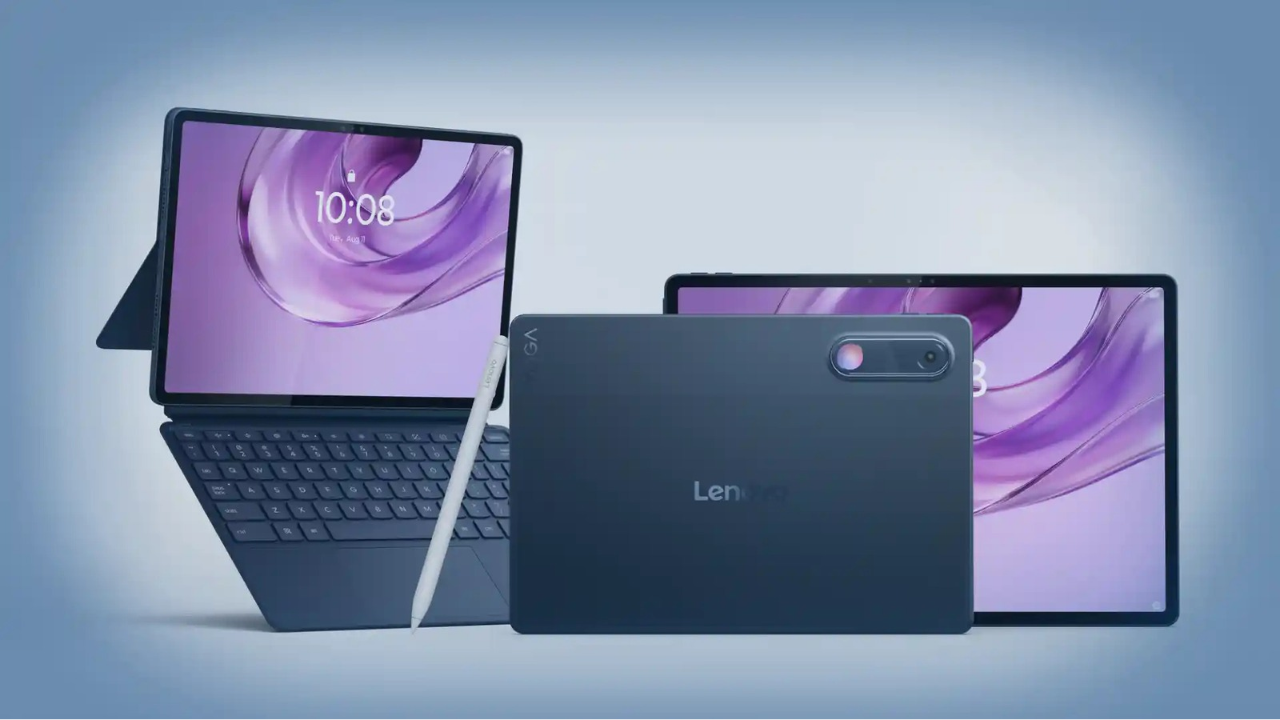
Lenovo is expanding its premium Android tablet lineup with the Yoga Tab Plus Gen 2 and the standard Yoga Tab Gen 2. The new models combine high-resolution displays, powerful processors, stylus support, and long-term software commitments, positioning them as options for users who want more than a tablet designed primarily for entertainment.
The Yoga Tab Plus Gen 2 is the more powerful model, featuring a large 13-inch display and Qualcomm’s Snapdragon 8 Elite processor. The standard Yoga Tab Gen 2 offers a smaller screen and a MediaTek chipset, giving buyers another option within the same product family. Both devices run Android 17 and support Lenovo’s latest tablet accessories.
Lenovo Yoga Tab Plus Gen 2 Features a 13-Inch 4K Display
The display is one of the biggest highlights of the Yoga Tab Plus Gen 2. Lenovo equips the tablet with a 13-inch PureSight Pro LTPS LCD panel featuring a resolution of 3840 x 2560 pixels and an adaptive refresh rate of up to 144Hz.
The screen uses a 3:2 aspect ratio, making it suitable for reading documents, browsing websites, taking notes, and working with creative applications. Its high refresh rate should also provide smoother scrolling and more responsive interactions than a conventional 60Hz tablet display.
Lenovo lists typical brightness of 700 nits and peak brightness of up to 1,100 nits, alongside full DCI-P3 color coverage and Dolby Vision support. These specifications make the tablet appealing to users who regularly watch high-quality video, edit images, or work with visual content.
The standard Yoga Tab Gen 2 has an 11.1-inch 4K display with the same maximum 144Hz refresh rate. Its smaller size makes it a potentially better choice for people who prioritize portability without giving up a high-resolution screen.
Snapdragon 8 Elite Powers the Plus Model
The Yoga Tab Plus Gen 2 is powered by Qualcomm’s Snapdragon 8 Elite mobile platform, paired with an Adreno 830 GPU. This flagship-class hardware gives the tablet the performance foundation needed for demanding Android applications, multitasking, gaming, and creative workflows.
Lenovo’s published specifications list configurations with 12GB or 16GB of LPDDR5X memory and internal storage options reaching 512GB, depending on the market and model. The company also includes a microSD card slot that supports cards up to 2TB, giving users additional flexibility for storing large files, videos, and offline media.
The standard Yoga Tab Gen 2 takes a different approach with MediaTek’s Dimensity 9500s processor. It offers up to 12GB of RAM and 256GB of internal storage, making it a more compact alternative for users who do not necessarily need the Plus model’s larger display.
Actual performance and available configurations may vary by region. Buyers should therefore check the specifications of the exact model sold in their market before making a purchase.
Six Speakers and a Large Battery
Audio is another important part of the Yoga Tab Plus Gen 2 experience. The tablet features a six-speaker system tuned by Harman Kardon and optimized for Dolby Atmos.
This setup is designed to deliver immersive sound when watching films, streaming television, playing games, or listening to music. It could also make the tablet a useful entertainment device for people who prefer built-in speakers instead of wearing headphones.
The Plus model includes a 12,700mAh battery and supports 68W charging. Lenovo’s specifications list a lightweight metal design weighing approximately 605 grams, although the tablet’s 13-inch screen means it is still larger than many everyday tablets.
The standard Yoga Tab Gen 2 uses an 11,000mAh battery and weighs around 480 grams. Its four-speaker setup provides a different audio configuration, while its smaller dimensions should make it easier to carry between home, university, and work.
Stylus Support and Productivity Features
Lenovo is also targeting students, professionals, and creative users with its accessory ecosystem. Both tablets support the Lenovo Tab Pen Pro 2, which can be useful for handwritten notes, sketches, annotations, and other pen-based tasks.
The Yoga Tab Plus Gen 2 also supports a dedicated All-in-One Clamshell Keyboard. When paired with a keyboard, the tablet can become a more practical tool for writing documents, responding to emails, and handling lightweight productivity tasks.
Lenovo Smart Connect adds another layer of convenience by helping users share content and continue working across compatible devices. Together, these features give the Yoga Tab lineup a broader purpose than simply watching videos or browsing social media.
However, a keyboard and stylus cannot completely replace a traditional laptop for every workflow. Users who rely on specialized desktop software should still consider their application requirements before switching to a tablet-based setup.
Android 17 and Long-Term Software Support
Software longevity is another selling point. Lenovo’s announcement states that the new Yoga tablets are expected to receive seven major Android operating system upgrades, extending through Android 24, alongside up to seven years of security updates through 2033.
This commitment could make the devices more attractive to buyers who prefer keeping their electronics for several years rather than upgrading frequently. Longer support also helps maintain access to newer Android features and important security improvements.
The actual timing of individual updates may depend on the model and region, but the stated support period is a significant part of Lenovo’s pitch for its latest tablets.
Availability and Final Thoughts
Lenovo’s Yoga Tab Plus Gen 2 and Yoga Tab Gen 2 have been announced, but availability and pricing depend on the market. As of October 21, 2026, Lenovo Philippines lists the tablets as coming soon, without a confirmed local launch date or price.
Overall, the Yoga Tab Plus Gen 2 combines a large 4K 144Hz display, flagship-class processing power, premium audio, stylus support, and an ambitious software update commitment. The standard Yoga Tab Gen 2 offers a smaller alternative for buyers who want similar display technology in a lighter device.
The most important question for prospective buyers will be pricing. If Lenovo can make the new tablets competitive against rival premium Android devices, the combination of high-end hardware and extended software support could make the Yoga lineup worth considering for entertainment, studying, and everyday productivity.