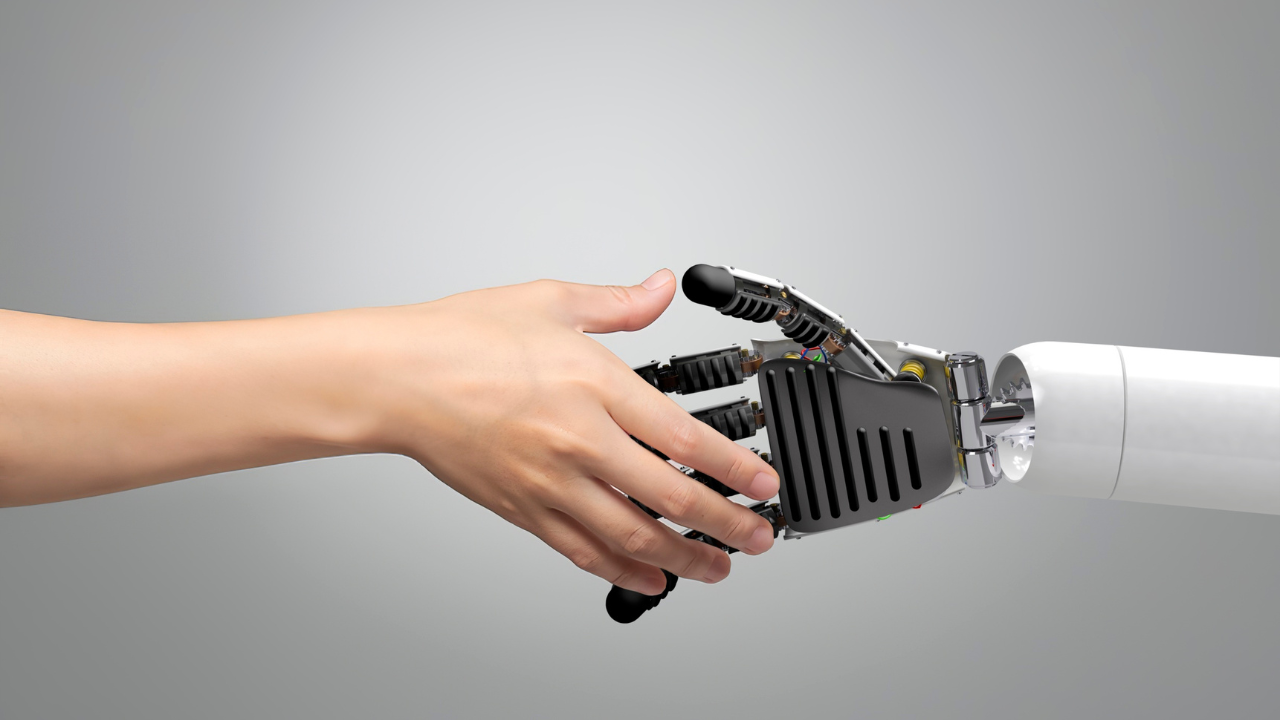
Artificial intelligence is changing the way we work.
A few years ago, AI was mostly a futuristic idea. Today, AI tools can write content, create images, analyze data, generate code, automate tasks, and assist businesses in making decisions.
This has created one of the biggest questions of the modern era:
Will AI replace humans in the workplace?
The answer is more complex than a simple yes or no.
AI will replace some tasks. Some jobs will change. New opportunities will appear.
The future of work will likely not be AI vs humans.
It will be:
Humans working with AI.
In this article, we will explore how AI is changing jobs, which skills will matter in the future, and how people can prepare.
The Rise of Artificial Intelligence
Artificial intelligence allows machines to perform tasks that normally require human intelligence.
AI can now:
- Understand language
- Recognize patterns
- Analyze data
- Generate content
- Make predictions
- Automate workflows
Businesses are adopting AI because it helps them:
- Save time
- Reduce costs
- Increase productivity
- Improve customer experiences
From startups to global companies, AI is becoming part of everyday work.
AI vs Humans: What Is the Difference?
AI and humans have different strengths.
What AI Does Better
AI is excellent at:
Speed
AI can process huge amounts of information quickly.
Example:
Analyzing thousands of documents in minutes.
Data Processing
AI can identify patterns in large datasets.
Example:
Finding trends in customer behavior.
Repetitive Tasks
AI can automate boring and repetitive work.
Examples:
- Data entry
- Scheduling
- Basic reports
- Customer support
Consistency
AI can perform tasks repeatedly without getting tired.
What Humans Do Better
Despite AI advancements, humans still have unique advantages.
Creativity
AI can generate ideas, but humans create original meaning and direction.
Humans understand:
- Culture
- Emotion
- Context
Emotional Intelligence
Humans can:
- Build relationships
- Show empathy
- Understand feelings
This matters in:
- Leadership
- Healthcare
- Teaching
- Customer relationships
Critical Thinking
Humans can question:
- Why something matters
- What should be done
- What consequences exist
AI provides information.
Humans provide judgment.
Leadership and Decision Making
Great leaders need:
- Vision
- Responsibility
- Communication
These are deeply human skills.
Jobs AI May Change
AI is already transforming many industries.
1. Marketing
AI can help with:
- Content ideas
- Customer research
- Advertising optimization
Future marketers will spend less time creating basic content and more time developing strategies.
2. Customer Support
AI chatbots can handle:
- Common questions
- Basic problems
- Customer requests
Humans will focus on:
- Complex issues
- Relationship building
3. Programming
AI can assist developers by:
- Writing code
- Finding errors
- Explaining solutions
Future developers may focus more on:
- Problem solving
- Architecture
- Creativity
4. Content Creation
AI can create:
- Images
- Videos
- Articles
- Scripts
But successful creators will still need:
- Ideas
- Storytelling
- Personal perspective
5. Administrative Work
Many repetitive office tasks can be automated.
AI may handle:
- Scheduling
- Data organization
- Reports
Allowing workers to focus on higher-value activities.
Jobs That Are Less Likely to Be Replaced
Some careers depend heavily on human abilities.
Healthcare Professionals
Doctors and nurses need:
- Human judgment
- Empathy
- Physical interaction
AI can assist, but humans remain essential.
Teachers
AI can explain concepts.
But teachers provide:
- Motivation
- Mentorship
- Emotional support
Entrepreneurs
AI can help build businesses faster.
But entrepreneurs need:
- Vision
- Risk-taking
- Leadership
Creative Professionals
AI can generate content.
But humans create:
- Meaning
- Culture
- Unique experiences
The Rise of AI-Assisted Workers
The biggest change will be the rise of people who know how to work with AI.
A person using AI effectively may outperform someone who does not.
Examples:
A writer using AI can:
- Research faster
- Generate ideas
- Improve drafts
A designer using AI can:
- Create concepts faster
- Experiment more
A business owner using AI can:
- Automate operations
- Analyze customers
The advantage belongs to AI-enabled humans.
The Most Valuable Skills in the AI Era
As AI handles more technical and repetitive tasks, human skills become more valuable.
1. AI Literacy
Understanding AI is becoming a basic skill.
Learn:
- How AI works
- How to use AI tools
- How to create AI workflows
2. Communication
The ability to explain ideas clearly is powerful.
Important for:
- Leadership
- Sales
- Content
- Collaboration
3. Creativity
Creative thinking helps you:
- Generate ideas
- Solve problems
- Create new opportunities
4. Problem Solving
AI is a tool.
Someone still needs to decide:
“What problem are we solving?”
5. Adaptability
Technology changes quickly.
The people who learn and adapt will have an advantage.
How Businesses Will Change
Future companies will likely have:
Smaller Teams
AI can handle many tasks that previously required large teams.
AI Employees
Businesses may use AI systems for:
- Research
- Customer service
- Analysis
- Operations
Human + AI Collaboration
The strongest companies will combine:
Human creativity + AI efficiency.
How Students Should Prepare for the Future
Students entering the workforce should focus on:
Learn AI Tools
Use AI for:
- Studying
- Research
- Productivity
Build Real Skills
Learn:
- Coding
- Marketing
- Design
- Communication
- Business
Create Projects
Experience matters.
Build:
- Websites
- Content
- Products
- Portfolios
The Future: AI Will Not Replace Everyone
The fear that AI will replace all humans is understandable.
But history shows that technology often changes jobs rather than eliminating all work.
The internet did not destroy business.
It created new industries.
AI will likely do the same.
New roles may appear:
- AI trainers
- AI consultants
- Automation specialists
- AI product managers
The Winning Combination
The future belongs to people who combine:
Human Skills
- Creativity
- Empathy
- Leadership
- Judgment
with:
AI Skills
- Automation
- Data analysis
- AI tools
- Technology
Together, they create a powerful advantage.
Final Thoughts
The future of work is not a battle between humans and AI.
AI is a tool.
The people who learn to use it effectively will have the biggest opportunities.
Instead of asking:
“Will AI replace me?”
Ask:
“How can I use AI to become better at what I do?”
The future will belong to those who can adapt, learn, and work alongside intelligent machines.